Slavomíra Ferenčuhová: Self-Help Reconstructions of Post-War Prefabricated Timber Housing: Between Production, Re-use and Consumption
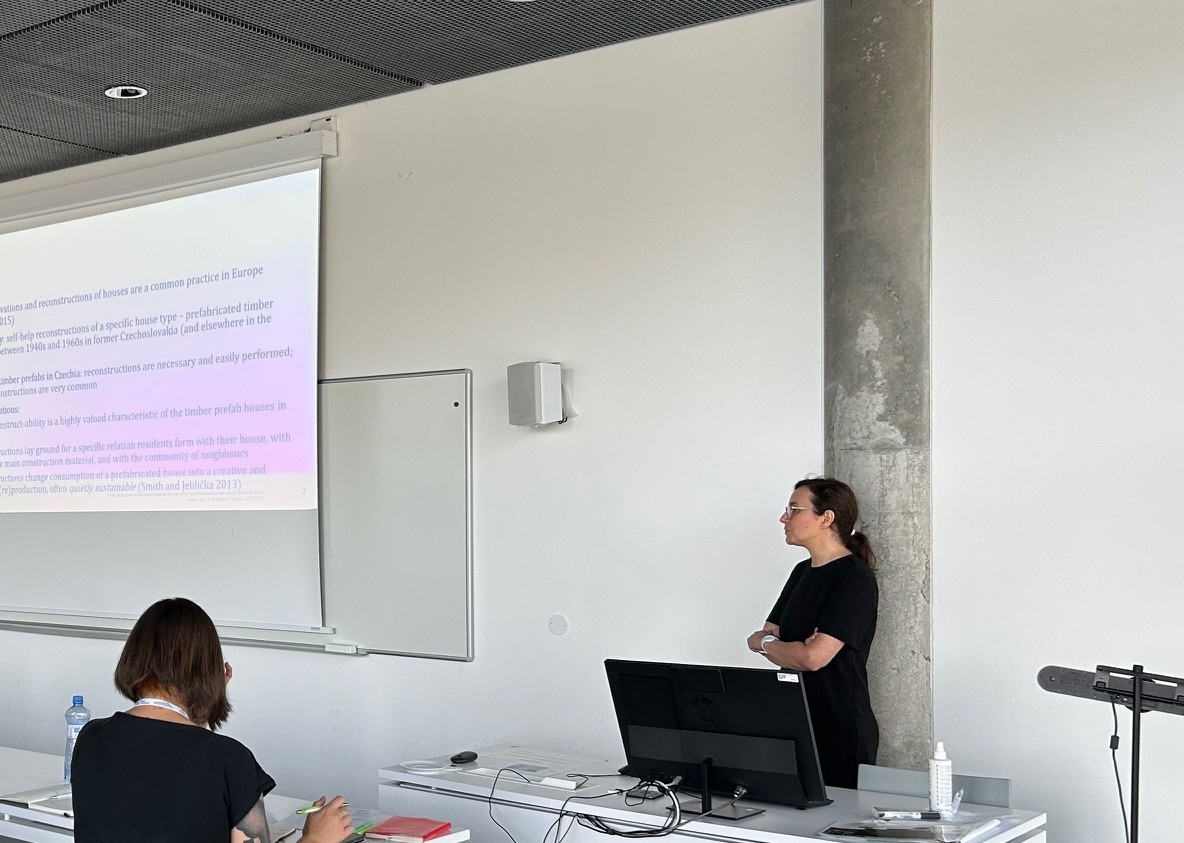
This paper examines self-help house reconstructions as a complex interplay of practices of consumption, re-use, production, and formation of a sense of place, developed through residents’ interaction with the material structure of their home. It focuses on a very specific type of housing: post-war prefabricated timber houses built in former Czechoslovakia between the 1940s and 1960s. Originally constructed during post-war reconstruction as temporary housing, many of these houses remain inhabited. Many have undergone manifold resident-led adaptations to address various challenges, including changing housing standards, changing local climate and maintenance needs.
Using data from focus groups conducted in summer 2022 with residents of these neighbourhoods in several Czech cities, this research explores how residents have perceived, interacted with, and modified their homes' materiality and spatial configurations. I focus specifically on do-it-yourself (DIY) reconstructions and repurposing as strategies for adapting standardized housing to individual needs.
This paper pursues three aims. First, it investigates the motivations behind self-help reconstructions and their relationship to expert and market-based housing adaptations. Second, it observes the types of self-help reconstructions undertaken and the strategies employed. Finally, it analyses how these reconstructions influence residents' relationships with their homes and their sense of place. This analysis considers the ways in which residents transform standardized housing stock into personalized homes through DIY practices.
Web of the conference and programme.